 CategoriesHot Products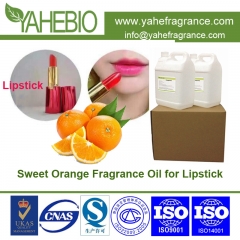
Food grade; Pure and Nature sweet orange flavor profile; Hight quality and favorable factory price. Dosage for lipstick: 0.5-3%.
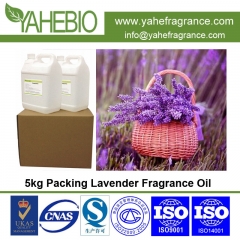
Long lasting; 16 years manufacturer of flavor and fragrance with ISO9001, ISO14001, ISO22000 Certificates; Pure and natural lavender profile; Hight quality and favorable factory price. Dosage for laundry: 0.2-0.5%
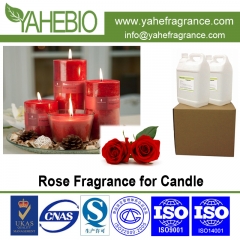
Natural and pure rose aroma, special used in candle application
Strong green tea aroma profile, used in candle application.
tags
The most crucial factor is sourcing transparency for high quality luxury essential oils. You need proof of origin, not promises. Transparency outranks price, speed, and packaging because luxury brands sell trust. Traceability gaps and labor risks can surface in the news and erode brand equity built over years. Vague claims like "green" or "eco-responsible" weaken premium positioning. This post gives you a verifiable checklist, not marketing claims. You will learn to question any premium fragrance manufacturer with confidence. yahebio leads with documented sourcing, so you can see what real proof looks like. Ask every manufacturer for documents before you sign.
Always ask for batch-specific documents like GC/MS reports and Certificates of Analysis to prove oil purity and origin.
Check that the manufacturer follows IFRA, REACH, and FDA rules and provides compliance paperwork for every batch.
Look for perfumers with formal training and test the scent pyramid balance to ensure high-quality blends.
You can order custom fragrances without large minimums and request revisions before scaling up.
Choose suppliers who prove ethical sourcing and sustainable practices with certifications and transparent documentation.
You need laboratory proof before you trust any supplier. Two documents matter most: GC/MS reports and Certificates of Analysis. Gas Chromatography/Mass Spectrometry separates a fragrance oil into individual chemical compounds and identifies each one. A Certificate of Analysis is a batch-specific document that summarizes test results and confirms what the oil contains. Together, these documents reveal adulteration, contamination, and synthetic substitutions.
Ask for a GC/MS report for every batch you receive. A complete report includes a chromatogram showing detector response over time, peak numbers, retention times, compound names, CAS numbers, and area percentages. The retention index helps you compare results across laboratories. Identification quality scores show how confidently the lab matched each compound to a known standard.
Testing methods go beyond basic GC/MS. Carbon 14 testing detects petroleum-based synthetic molecules. Isotopic ratio analysis identifies synthetic origins. Chiral GC distinguishes synthetic enantiomers from natural ones. Marker compounds like dihydrolinalool signal synthetic addition. Physical measurements such as refractive index and specific gravity provide additional verification. Plant Therapy provides compliance documentation for every oil, including batch-specific GC/MS testing that demonstrates the absence of adulteration. This level of transparency sets a clear standard for high quality luxury essential oils.
Phthalates are chemical compounds used to make plastics flexible and help fragrances bind and last longer. Certain phthalates act as fixatives in scented products. The concern is real: some phthalates, particularly DEHP and DBP, are classified as endocrine disruptors. Research published in Environmental Health Perspectives has linked repeated exposure to hormonal disruption and reproductive issues. The European Union has banned several phthalates outright.
Testing data reveals how widespread contamination is. In one analysis of 22 products, 100% contained phthalates ranging from 40 ppb to 13,029 ppb. The highest contamination category, over 2,000 ppb, covered 41% of products tested. Only 36% fell below 1,000 ppb.
"We've seen companies make claims of being 'phthalate-free,' only to specify in the fine print they are free of dibutyl phthalates—a misleading statement since DBP is not typically used in fragrance to begin with."
This quote from an industry reformulation project shows why you must verify claims. A phthalate and paraben free status, when certified by third-party testing, confirms a supplier prioritizes safety over cost savings. Phthalate, paraben, and petrochemical-free formulations protect your customers and your brand reputation. When you source premium grade fragrance oils, demand documentation that proves these claims. Your quality standards should require nothing less. A skin safe fragrance oil must pass rigorous testing before it reaches your production line.
Credentials separate a true perfumer from a sales representative with a scent kit. A French perfumer typically trains through Bachelor's degree or Master's degree programs in perfume formulation, aromas, and cosmetics. These degrees cover natural ingredients, safety, and toxicology. Some perfumers complete post-baccalaureate study at specialized perfumery schools taught by renowned noses, reaching up to a Doctoral degree level. Others earn the Introduction to Perfumery Certificate from the Fashion Institute of Technology. That program covers fragrance matching, accord development, and the science behind perfumery. Aromatic Innovations builds its team around this level of training, pairing experienced perfumers with researchers and creative experts who guide clients from concept to completion.
Ask any candidate supplier who actually compounds the oil. A perfumer with formal training understands how molecules interact, how a formula behaves at different usage rates, and how to fix a fading accord. This skill matters most in premium grade fragrance oil manufacturing, where a single misjudged ratio can ruin an entire batch. Aromatic Innovations designs and manufactures everything in-house at its North Brunswick, New Jersey facility. Each formula undergoes testing for performance, consistency, and compatibility with the specific product type. Materials pass a rigorous qualification program complying with cGMP and NSF standards before approval. That structure keeps fragrance oil formulation stable from one order to the next.
A balanced blend follows the scent pyramid. Top notes create the first impression and evaporate quickly. Middle notes form the heart and add body. Base notes anchor the fragrance and act as fixatives. The symphony effect explains that notes transition smoothly rather than separating cleanly. Top notes dominate at first while middle and base notes sit subdued, then emerge as lighter molecules fade. A common starting ratio uses a higher proportion of top and middle notes, with base notes used sparingly for longevity.
Too many top notes make a scent fade fast. Too few base notes do the same. Before blending, sample each single-note oil on its own. Smell it on a blotter at intervals to track how it evolves. Compare that behavior against the target pyramid. Only then combine notes drop by drop. This method lets you judge whether a supplier truly controls premium grade fragrance oils or simply mixes whatever smells pleasant in the bottle.
Consistency across batches depends on disciplined sourcing and mixing. American Oil Products sources materials from the most consistent producers, mixes each batch with care, and screens every product against the highest standards. That discipline protects the quality you promise your customers. When you evaluate fragrance oil suppliers, request samples of single notes and a finished blend side by side. A supplier using high quality luxury essential oils will show you the difference in the first ten minutes on a blotter.
Small brands often assume professional-grade oils require huge volume commitments. That assumption is outdated. Suppliers like American Oil Products offer custom blending services for essential and fragrance oils tailored to exact specifications, allowing small-scale requests. Decades of expertise keep every formula compliant with current standards. You can access premium grade fragrance oil without gambling on unsold inventory.
Some suppliers apply the same logic. They support custom formulation for niche markets without large volume requirements. A brand developing a custom scent for a niche product can request a small-scale blend. Revisions happen before you scale, so batch consistency and stability hold from the first sample to full production.
Fragrance load changes with the product format. Copying one percentage across every application causes failures. Use this reference:
|
Product Format |
Recommended Fragrance Oil Load |
Notes |
|---|---|---|
|
Candles |
Test a range of loads to find optimal strength |
Compare cold throw after 24h and hot throw after cure |
|
Soap |
Small test batch first |
Watch for acceleration, ricing, separation, discoloration |
|
Reed diffusers |
Test a range of loads in diffuser base |
Check wicking speed and scent balance after 24-48 hours |
|
Skin-safe projects (e.g., roll-ons) |
Stay under IFRA limit |
Use approved oils, dilute properly, patch test |
Luxury candle fragrance oils deserve their own design process. Cold throw reflects how customers experience an unlit candle. Hot throw previews the burning experience and reveals how top, middle, and base notes shift across the burn cycle. Cure time affects scent strength, so evaluate candles only after full curing. Natural waxes like soy often deliver a stronger cold throw, while paraffin waxes produce an intense hot throw. Always test a fragrance oil in the wax you intend to use.
Do not copy a candle percentage into soap, lotion, perfume, reed diffusers, or room sprays. Check the IFRA sheet for that exact oil and application.
Aromatic Innovations tests each formula for performance, consistency, and compatibility with the specific product type. That testing protects consistent quality and your brand reputation.
Three regulatory frameworks govern fragrance safety. The International Fragrance Association issues Standards that restrict, ban, or set allowable concentrations for fragrance ingredients. These rules come from scientific research and toxicological evaluations. IFRA members produce a large share of the global fragrance volume, so ifra certifications carry real weight. REACH covers all chemical substances manufactured or imported into the EU. It requires industry to assess chemical risks and provide safety information to users. The FDA regulates cosmetics under the Federal Food, Drug, and Cosmetic Act. Cosmetics do not need pre-market approval, but they must be safe, properly labeled, and made according to Good Manufacturing Practices.
IFRA: sets safe usage limits for fragrance ingredients across product categories
REACH: requires chemical risk assessment and safety information for EU imports
FDA: enforces safety, labeling, and manufacturing practice rules for US cosmetics
These frameworks work together. IFRA's global standards are accepted by the FDA and supported by major manufacturers worldwide. Your supplier should follow fda and ifra guidelines and standards without treating them as optional. Some suppliers maintain ifra, iso, and clp standards across their entire catalog, so every oil meets recognized benchmarks for safety and quality.
Certifications alone prove nothing about a specific shipment. You need batch-specific data. Every order should arrive with a Certificate of Analysis containing a full chromatogram, constituent breakdown, physical properties like density and refractive index, and the name of the accredited testing laboratory. Batch-specific GC/MS results confirm what the oil actually contains. Safety Data Sheets provide handling and hazard information. IFRA certificates confirm compliance with usage limits for each product category.
Demand full clp and regulatory documentation with every shipment. Reports must be batch-specific, not generic or outdated. Suppliers who cannot provide batch-level data fail the most basic test of regulatory compliance. Stability testing and compliance support ensure fragrances meet industry standards. Suppliers like Plant Therapy provide full regulatory compliance documentation for every batch, including ifra, iso, and clp standards compliance, so you never guess whether an oil meets quality standards. This rigorous compliance protects your customers and your brand. When you evaluate fragrance oils, ask for the paperwork before you ask for the price.
Ethical sourcing begins with how raw materials for fragrance oils reach the manufacturer. Traditional methods are labor-intensive and sensitive to environmental changes. A few producers follow fair trade principles, maintain traditional processing techniques, and pursue recognized certifications. These efforts support fair wages, safe working conditions, and responsible sourcing for local communities.
Extraction methods shape the environmental footprint. Green chemistry creates processes that generate less waste, use less energy, and produce fewer harmful byproducts. Eco-friendly extraction methods are available, though specific techniques are not detailed in the provided evidence.
Sustainable packaging aligns with luxury brand values. According to market research, many consumers value sustainable packaging. The new aesthetic is sustainable luxury, with premium finishes using renewable foils and water-based UV glosses. B2B buyers prioritize suppliers with recognized certifications and low-carbon production lines.
These efforts show luxury and sustainability are not mutually exclusive.
Fragrance oil suppliers that focus on standards over volume typically operate as specialized, smaller companies. They invest in ethical sourcing and maintain tighter quality control. Look for recognized certifications on ingredient documentation. Additional verification may be available through independent certifiers.
A specialized supplier screens for unwanted chemicals. Many suppliers exclude phthalates, parabens, PFAS, and petrochemicals from their formulations. These exclusions protect your customers and align with retailer compliance programs.
Some suppliers exemplify this specialized approach. They source high quality luxury essential oils from consistent producers and test every batch against rigorous standards. This discipline protects the fragrance oils you rely on for your product lines. When you evaluate fragrance oil suppliers, demand documentation that proves ethical practices. Your brand reputation depends on verifying claims, not assuming them.
Bring this checklist to every conversation with custom fragrance oil manufacturers:
Batch-specific GC/MS and COA documents
REACH compliance paperwork
Perfumer credentials and scent pyramid balance
No-MOQ options and revision support
Ethical sourcing proof
Sourcing transparency, blending expertise, and regulatory compliance protect both scent quality and your brand reputation. Request documentation and samples before you sign anything. A supplier who hesitates to share paperwork fails the test. Verify certifications independently, since issuing bodies confirm them, not the seller. Some suppliers meet every standard on this list, from high quality luxury essential oils to full compliance paperwork. Contact a reputable supplier for a consultation or sample kit.
Ask for a batch-specific GC/MS report, a Certificate of Analysis, a Safety Data Sheet, and a REACH compliance document. These prove what the oil contains and where it can be used. Reputable suppliers like Wholesale Botanics supply this paperwork with every batch, so you never have to guess.
Demand third-party test results, not a label claim. Some suppliers say "phthalate-free" while only excluding one type. Certified testing confirms the full formulation is clean. Verify the report matches your exact batch number.
Yes. Many specialized suppliers now offer no-MOQ options. You can request a small test batch, review revisions, and scale only after the formula works. This lets small brands access professional-grade high quality luxury essential oils without risking unsold inventory.
The pyramid has top, middle, and base notes. Top notes fade first, middle notes form the heart, and base notes anchor the scent. A balanced pyramid holds together over time. Ask your supplier to show how their blend performs at each stage.
Check for REACH compliance documents tied to your specific batch. Generic certificates prove nothing. Request the testing lab's name and confirm the results independently. A supplier who hesitates to share paperwork fails the test.






 ONLINE
 13923210784
