 CategoriesHot Products
Food grade; Pure and Nature sweet orange flavor profile; Hight quality and favorable factory price. Dosage for lipstick: 0.5-3%.
Long lasting; 16 years manufacturer of flavor and fragrance with ISO9001, ISO14001, ISO22000 Certificates; Pure and natural lavender profile; Hight quality and favorable factory price. Dosage for laundry: 0.2-0.5%
Natural and pure rose aroma, special used in candle application
Strong green tea aroma profile, used in candle application.
tags
A wrong manufacturer costs far more than a low price. Suppliers who cut corners on testing or compliant raw materials often trigger recalls, legal liabilities, costly reformulations, and lasting brand damage. So before you commit, request samples of apple and lemon fragrance oils. Test each one inside your own unscented detergent base.
Then judge every candidate on six points: expertise, sample fidelity, production consistency, compliance, pricing and minimum order quantities, and support. These checks protect your fragrance oil for Laundry investment. Follow this framework, and you will avoid expensive mistakes.
Test every fragrance oil sample inside your own unscented detergent base before you commit.
Judge each manufacturer on expertise, sample quality, batch consistency, compliance, pricing, and support.
Use the 30/50/20 rule to check top, heart, and base notes in your scent blend.
Ask for IFRA compliance, skin safety reports, technical data sheets, and batch quality reports.
Calculate total landed cost and match minimum order quantities to your realistic sales forecast.
You need a manufacturer who understands how fragrance behaves in a wash cycle. Micro-encapsulation is the standard for laundry applications. Ask your candidate about core–shell encapsulation, matrix encapsulation via spray drying for powders, and evolving capsule chemistries. A capable supplier moves from melamine–formaldehyde toward acrylates/polyurea or biodegradable options.
Capsule engineering matters just as much. The manufacturer must balance release against stability, control capsule size for deposition, and apply surface coatings that improve fabric adhesion through charge interactions or hydrogen bonding. Capsules must deposit effectively on fabric, resist filtering or leaking, and can bind directly to textiles for permanent fragrance finishes. They also must withstand manufacturing without altering aesthetics or stability, remain intact 6–12 months on shelf, and come as slurries or powders. A strong fragrance-loading strategy selectively loads top and mid notes while leaving base notes unencapsulated to preserve a complete fragrance pyramid.
Apple and lemon scents demand specific technical skill. Ask manufacturers about their formulation process and whether they offer laundry-safe ingredient certifications. Search online forums for reviews.
You should also verify regulatory and sustainability capability. Rising demand for biodegradable capsules comes from EU microplastics legislation. Your supplier should offer both biodegradable and non-biodegradable options. Request proof of IFRA or QRA compliance, EU IFRA for European markets, China GB 2760 for Chinese markets, and ISO, HACCP, or HALAL certification where relevant. These credentials show a manufacturer can support your fragrance oil for Laundry project across different regions.
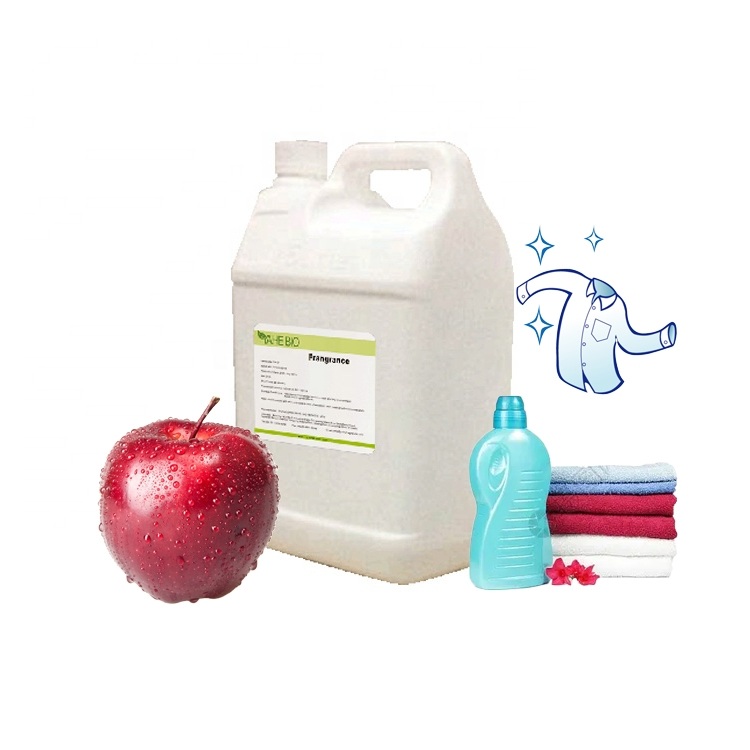
Evaluate the balance of top, heart, and base notes. Top notes hit immediately but fade fastest. Heart notes define the character during the wash and dry cycle. Base notes linger on stored fabrics. This balance ensures your apple and lemon fragrance oils deliver a complete experience from the first sniff through the dried fabric stage. Manufacturers may formulate with this pyramid in mind, but you must verify through your own testing.
Follow a standardized testing protocol to get reliable data:
Prepare a control sample alongside several dosage variants.
Evaluate initial odor, color, clarity, pH, and viscosity.
Perform accelerated and real-time storage stability checks.
Wash standardized fabric loads under repeatable, controlled conditions.
Assess fabric at wet, dried, and stored stages.
Use a trained sensory panel to document fragrance intensity and character over time.
Request technical data sheets from each manufacturer. These sheets specify usage rates, recommended concentrations, and stability information for laundry applications. A supplier who provides complete documentation shows confidence in their product.
Use consistent wash conditions when you compare suppliers. Cotton retains fragrance differently than polyester. Blends and towels each behave uniquely. Line drying creates lower volatility and less heat exposure than machine drying. Your testing must use fabrics and washing habits that match your target consumer. For international products, consider water hardness, wash temperature, machine type, and detergent dosage common in priority markets.
Monitor these parameters throughout the comparison:
Color, viscosity, pH, and separation in the bottle
Wet-fabric odor immediately after washing
Dry-fabric odor after drying
Retention after extended storage
This comparison reveals which manufacturer delivers the most stable Fragrance oil for Laundry. A supplier whose samples maintain character across different fabrics and drying methods earns more trust. One whose scent fades on certain materials shows weakness in their micro-encapsulation or formulation process. Document all results systematically so you can make an evidence-based decision.
A sample that performs well in your lab does not guarantee the same result from a full production run. You must evaluate their quality control process at scale. Reliable manufacturers implement a multi-stage QC system that catches issues before they reach your formulation.
Examine their raw material incoming inspection first. Each batch of essential oils undergoes a GC purity test. The manufacturer compares the chromatogram against a natural-material fingerprint using GC-MS. This step verifies identity and confirms batch consistency before blending begins.
Review their semi-finished product inspection next. The manufacturer compares key aroma components against the approved reference profile using GC. This step ensures olfactory consistency before filling. The finished product undergoes GC quantification of key aroma compounds, combined with sensory panel evaluation, to confirm batch conformity.
Process monitoring adds another layer of protection. Best-in-class manufacturers record production parameters in real time — temperature, stirring speed, and timing — with automatic alarms on deviation. Electronic batch cards ensure full traceability from raw material to finished oil.
GC-MS serves as a reliable, rapid method for detecting hazardous compounds in fragrances. Regular screening for restricted substances protects consumers from potential exposure to toxic compounds. This technology helps regulatory agencies and manufacturers ensure product integrity.
For your Fragrance oil for Laundry project, request batch-to-batch GC/MS reports from each candidate. A manufacturer that shares this data demonstrates confidence in their consistency.
Laundry applications demand tighter consistency than candles or personal care. The wash environment subjects fragrance oils to water, heat, agitation, and chemical exposure. Micro-encapsulated oils add complexity. Batch variation in capsule size or shell thickness directly affects deposition and release on fabric.
Implement a repeatable testing protocol to verify consistency across batches. Use the same wash conditions, drying method, and fabric type for every test. Measure wet-fabric odor immediately after washing. Evaluate dry-fabric odor after drying. Test retention after extended storage. Compare each result against your approved reference sample.
Document all findings systematically. When a batch deviates from the reference, ask the manufacturer for their root cause analysis. A transparent supplier shares corrective actions and preventive measures.
Request batch-to-batch GC/MS reports when available. These documents provide objective evidence of consistency across production runs.
Certifications protect your business from regulatory risk. IFRA compliance remains non-negotiable for any fragrance oil used in laundry products. The International Fragrance Association sets usage limits based on thorough safety assessments. Your manufacturer must prove compliance through complete documentation.
Technical data sheets complete the certification package. These sheets must specify flash points, storage conditions, and stability data specific to laundry applications. Heat, moisture, and agitation during washing degrade poorly formulated oils. A complete data sheet demonstrates the manufacturer understands these challenges.
Environmental claims require careful verification. The European Union has proposed new rules targeting explicit green claims businesses make toward consumers. Examples include "Packaging made of 30% recycled plastic" or "CO2 emissions halved compared to 2020." These claims must meet strict criteria for truthfulness, accuracy, substantiation, relevance, and specificity. Life cycle thinking should cover raw material extraction through end-of-life stages.
A credible verification process follows these steps:
The verifier defines objectives and identifies applicable standards.
The verification team collects evidence, conducts site visits if necessary, and analyzes estimates and assumptions.
The manufacturer corrects any deficiencies before the verifier issues a statement.
An independent certification body evaluates results and confirms plausibility.
The verifier performs ongoing monitoring for updated reports or declarations.
You should ask your manufacturer for proof of each step. Look for life cycle assessment data that discloses methodologies, assumptions, and limitations. Claims must comply with recognized environmental standards and relevant laws. Choosing a manufacturer with transparent sustainability credentials for your Fragrance oil for Laundry project ensures you receive genuine environmental benefits, not marketing claims.
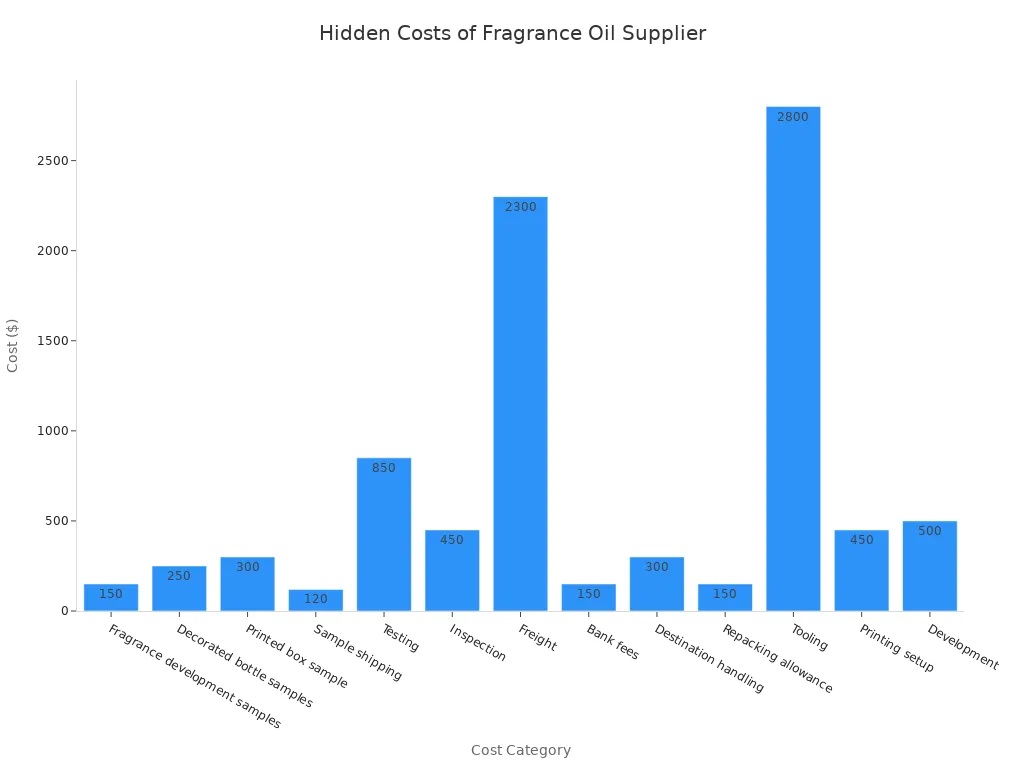
A low quoted unit price often hides the real cost. You must calculate the total landed cost per saleable unit. Add product cost and shipping costs, including hazmat surcharges. Then divide by expected saleable units.
|
Cost item |
Supplier A |
Supplier B |
|---|---|---|
|
Base shipping cost |
$8.00 |
$8.00 |
|
Hazmat surcharge |
$25.00 |
$15.00 |
|
Total shipping cost per bottle |
$33.00 |
$23.00 |
Supplier A looks cheaper at first glance. Supplier B costs less per bottle after you add every fee. Ask each manufacturer for a complete cost breakdown before you compare quotes.
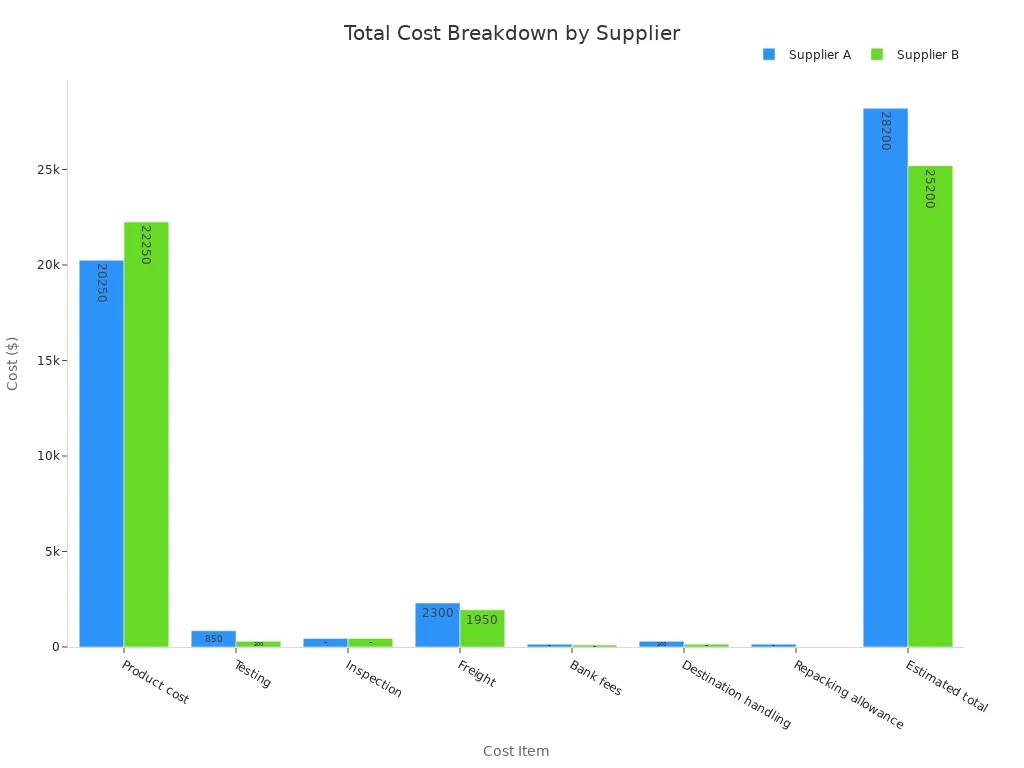
Shipping hazardous materials adds another layer. Fragrance oils with high alcohol content classify as Class 3 Flammable Liquids. Carriers charge hazmat surcharges that can exceed the base freight rate. International air freight becomes impractical without specialized forwarders and UN-certified packaging.
Because your Perfume contains 80% alcohol, it is legally classified by aviation and transport authorities as a Class 3 Flammable Liquid (Hazardous Material / Hazmat). Carriers apply severe surcharges for handling dangerous goods.
Minimum order quantities also affect your total investment. A low MOQ helps you test the market. A high MOQ lowers unit cost but ties up capital. Match the MOQ to your realistic sales forecast for your Fragrance oil for Laundry line.
Measure full resolution time as well. This metric captures the total time from your inquiry to a confirmed fix. Compare response times across email, phone, and chat channels. A manufacturer may answer email quickly but ignore phone calls.
Ask for references or case studies on similar laundry fragrance projects. A supplier with proven experience in micro-encapsulated oils can anticipate problems before they arise. Request customer satisfaction scores and repeat purchase rates. These numbers reveal whether existing clients stay loyal after the first order.
You now have a six-step framework to evaluate any custom fragrance oil manufacturer. Test samples under consistent wash conditions. Verify usage rates against your detergent base. Demand IFRA-compliant certifications for every batch. Judge custom blends with a balanced top, heart, and base note structure. Seek forum feedback on apple and lemon fragrance oils. Apply these steps before you sign a long-term contract. This diligence protects your Fragrance oil for Laundry line from recalls and reformulations. Start evaluating manufacturers with confidence today.
Wash standardized fabric loads under repeatable conditions. Evaluate wet-fabric odor, dry-fabric odor, and retention after storage. Evaluate the balance of top, heart, and base notes. Compare every sample against your control. Document results systematically. This protocol reveals which Fragrance oil for Laundry delivers consistent performance across real wash cycles.
Request batch-to-batch GC/MS reports. These documents show objective evidence that key aroma compounds match your approved reference profile. Ask about their raw material inspection, semi-finished product checks, and finished product quantification. A transparent supplier shares root cause analysis when deviations occur. Request this data from your manufacturer.
IFRA compliance is non-negotiable. Technical data sheets must specify flash points, storage conditions, and laundry-specific stability data. For European markets, verify EU IFRA compliance. For Chinese markets, confirm GB 2760. These credentials protect your Fragrance oil for Laundry line from regulatory risk.
Match MOQ to your realistic sales forecast. A low MOQ lets you test the market without tying up capital. A high MOQ lowers unit cost but increases inventory risk. Calculate total landed cost per saleable unit before comparing quotes. Include freight, hazmat surcharges, and destination handling. The cheapest quoted price rarely delivers the lowest final cost.
Track the first response time from your initial inquiry to their first reply. A supplier who replies promptly shows operational discipline. Track full resolution time as well. Test email, phone, and chat channels separately. A supplier may answer email quickly but ignore calls. Ask for references on similar laundry fragrance projects before committing.






 ONLINE
 13923210784
